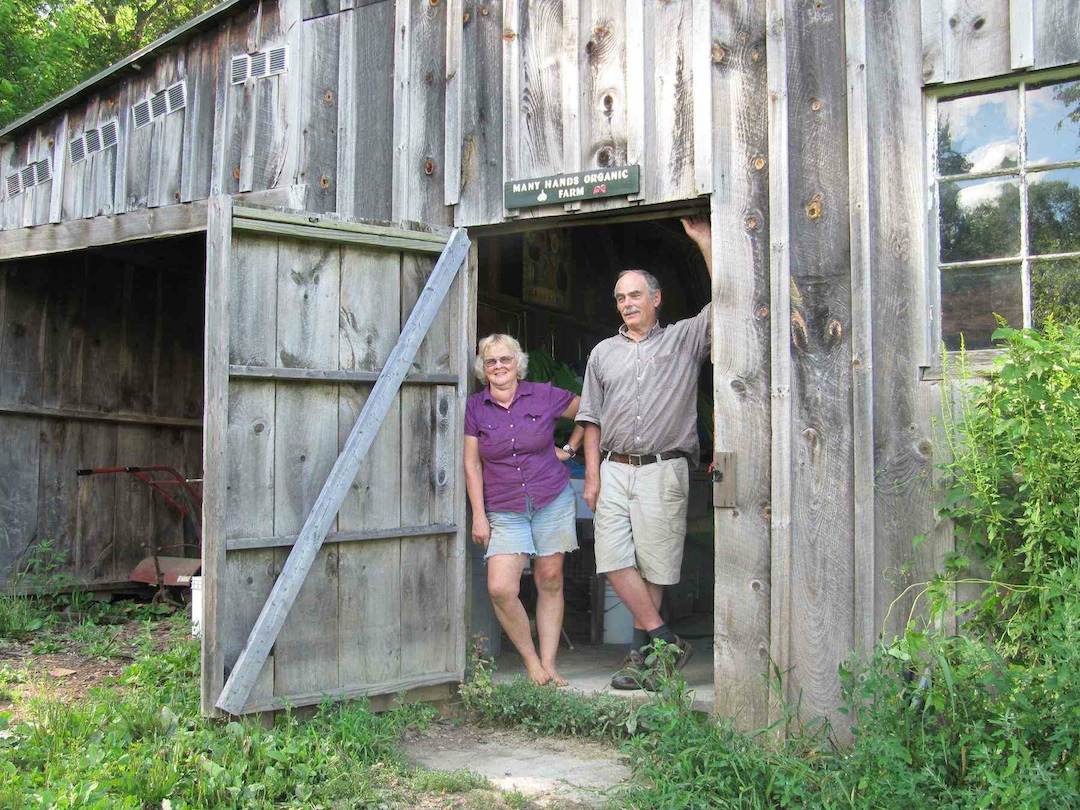
Julie Rawson grew up on a western Illinois farm with parents who mixed agriculture, medicine (her father was a large-animal veterinarian), and activism (her mother was deeply engaged in civil rights issues). When she was pregnant with her first child, she said to her husband, Jack Kittredge, “I’m really sorry, but I think I have to raise these children on a farm.” Jack’s background was far more suburban. “I wasn’t a farmer and didn’t intend to be a farmer,” he recalls, “but I fully supported homesteading, raising your own food, having the kids have access to all the principles and lessons that nature teaches you.”
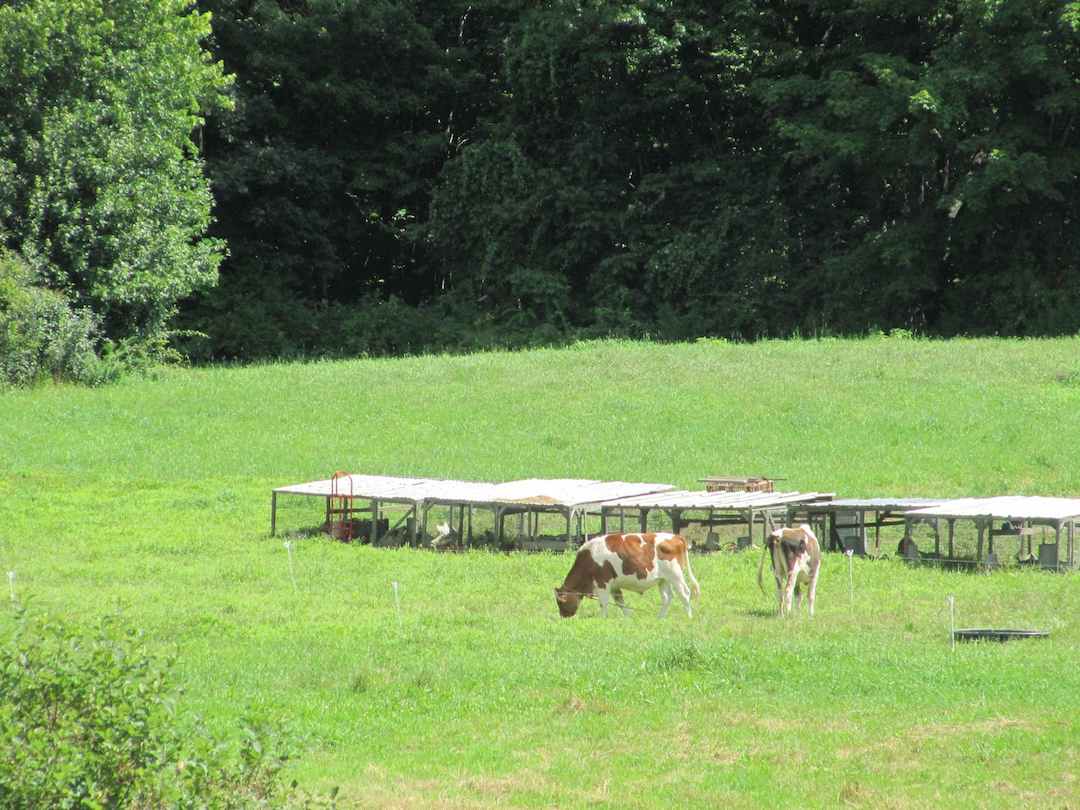
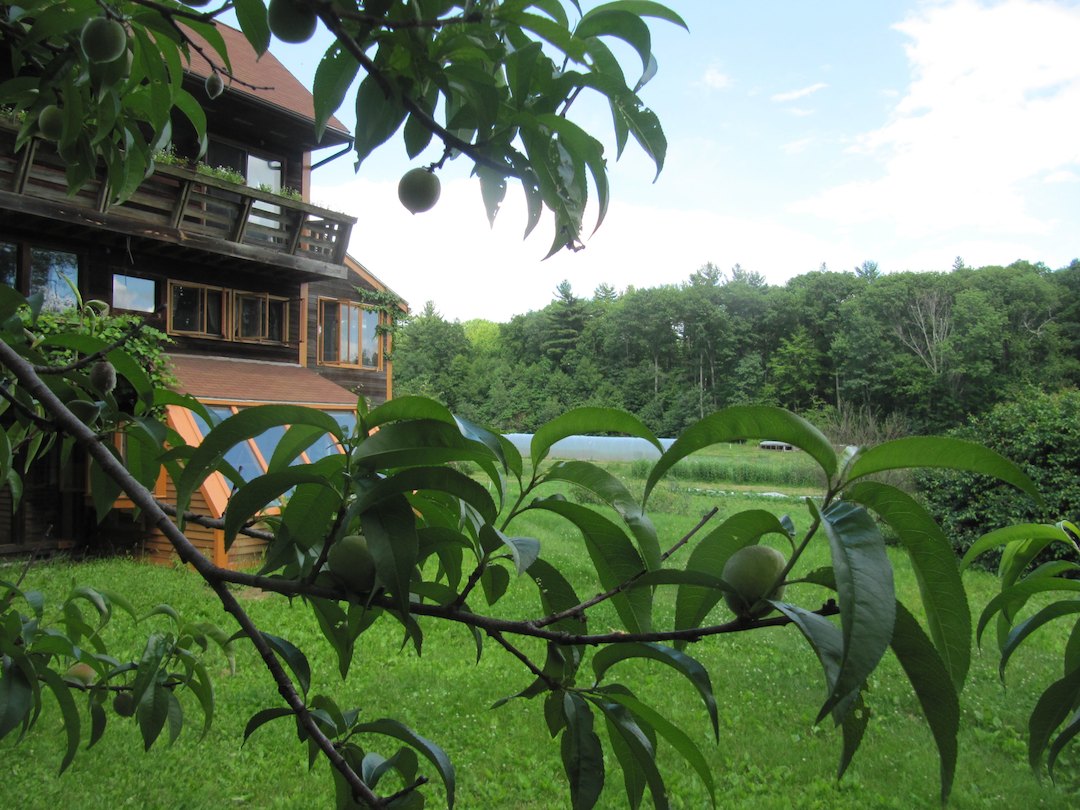
They purchased 55 acres of land carved out of what had been a larger farm in the southern part of Barre, and moved there in 1982. The surrounding acreage was already being subdivided into smaller houselots, but Julie and Jack immediately began creating a new farm, building an energy-efficient house and “a lot of sheds” as well as planting fruit trees and adding three more children to their family. They started marketing food on a small level in 1984 and now sell vegetables, fruit, meat, and eggs, mostly through Community Supported Agriculture (CSA) shares. They are also deeply involved in the policy, advocacy, and education sides of farming through their work with the Northeast Organic Farming Association (Julie serves as the executive director of NOFA/Mass, which is headquartered at their farm, and Jack is the policy director).
We tend to think of the 1960s and 70s as the “back to the land” era, making Many Hands Organic Farm something of a latecomer to that movement. And yet the history going “back to the land” in the northeastern U.S. shows that Americans have been acting on that impulse for a very long time. In starting their new Barre farm in the 1980s, Julie and Jack combined many of the motivations that have prompted others—urban, suburban, and formerly rural—to start or return to farming.
The first wave of new homesteading actually happened more than a century ago, largely in response to repeated financial panics around the turn of the twentieth century. American ideals of independence and achievement sat uneasily with the realities of the expanding industrial economy, with its market-driven booms and busts. Buying a piece of land where you could grow food—what Dona Brown has termed “the enduring dream of self-sufficiency in modern America”—was one way that people sought some kind of stability and security. [1]
Peaking just before World War I, this trend was revived during the Depression by a wide range of people—immigrants from rural parts of southern and eastern Europe in search of affordable land, progressive reformers hoping to address the ills of industrial capitalism, city-dwellers returning to family farms as a source of food and community in hard times. Many old farms in central and north-central Massachusetts were reinvigorated in these decades, and some remain in active production today.
The ideal of eating healthy, home-grown food has long been a component of back-to-the-land thinking, and it is one that Julie Rawson and Jack Kittredge have embraced with particular gusto. Like other farmers who approach food cultivation in a holistic way, they see the vitality of the soil as integral to the nutritional value of what is grown there, which carries over to the health of the animals and people who eat those foods. They have worked for many years to build up the soil on their farm with minerals and organic matter and to learn about ways of preserving food at its peak—canning, drying, freezing, fermenting, juicing, and root-cellaring.
There have also always been tensions and contradictions within the back-to-the-land impulse, many of them centering around the use or rejection of the ideas and techniques of industrialized farming. Especially in the early decades of the twentieth century, some homesteaders eagerly followed the latest developments of agricultural science as promoted by agricultural extension services and companies selling new products to make farming more efficient and profitable. One of these was Red Apple Farm in nearby Phillipston, where a young couple who had grown up in Worcester parlayed their college educations in pomology (the science of cultivating fruit trees) and nutrition into a commercial orchard business at a once-disused farm starting in the late 1920s.
By the time of the more iconic back to the land movement of the 1960s and 70s, this faith in scientific agriculture was being deeply challenged. A host of interconnected environmentalist, economic, and social justice reasons came into play for the homesteaders of this era.[2] Many of these were prompted by revelations of problems caused by pesticide use. But there were also concerns about how the logic of expansion and economies of scale had left small farmers in the dust by that point. To survive economically, many older farms in the northeast turned to the kinds of direct-marketing techniques now widely favored by small producers. Red Apple Farm shifted into being a pick-your-own and farmstead operation in the early 1980s, just as Julie Rawson and Jack Kittredge were charting their own path into organic agriculture in Barre.
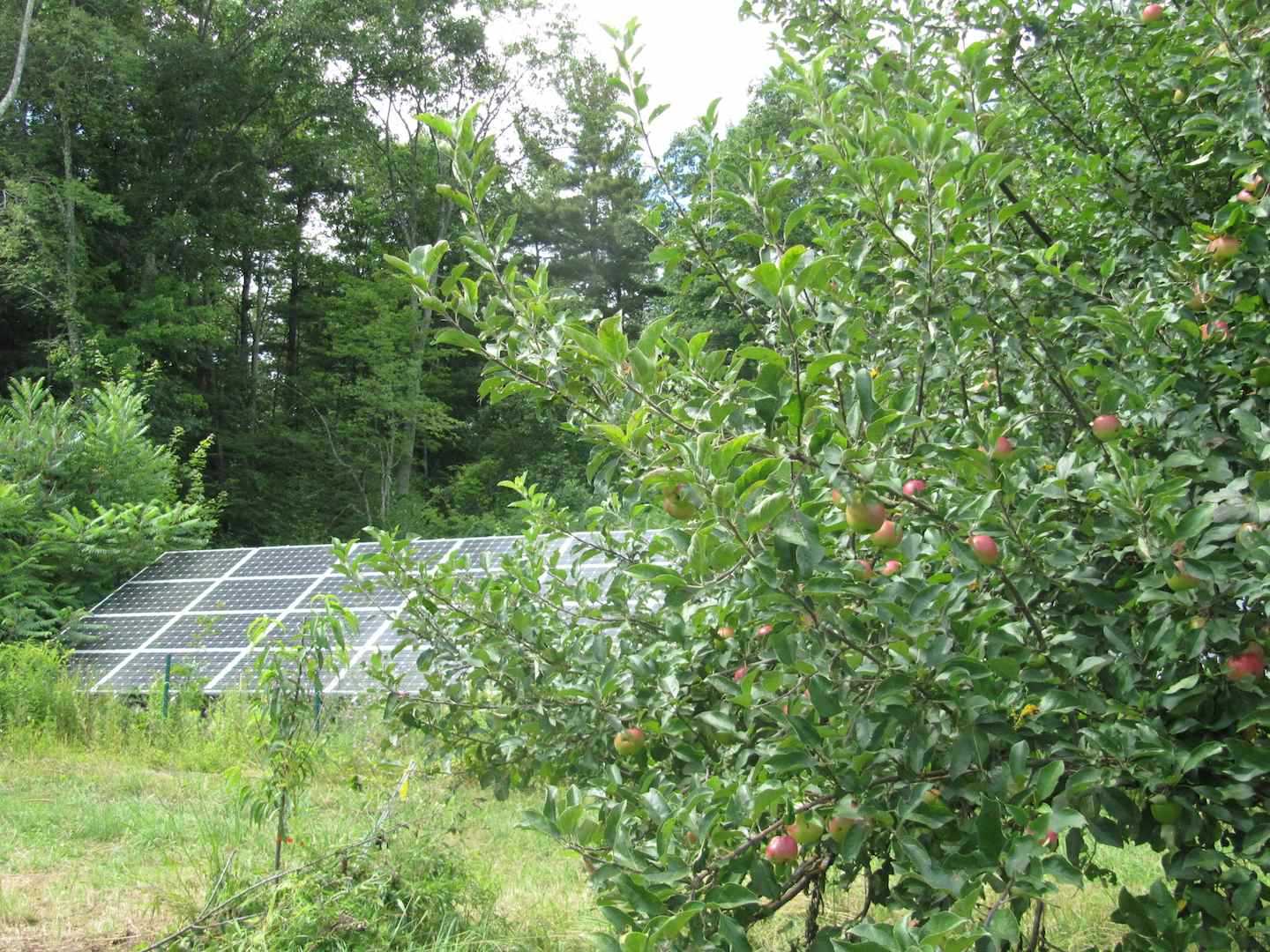
Even moreso than at most small farms founded in the environmentally-conscious era of late twentieth century homesteading, the work of Many Hands Organic Farm has been very directly linked with politicized issues around energy use, social justice, and climate change. Their project of employing and mentoring ex-offenders and people in recovery from addictions is prompted by their sense of how the worst stresses of contemporary modes of living, working, and eating fall disproportionately on the bodies of particular kinds of people, and how those patterns map onto racial and economic disparities. They are at the leading edge of discussions about “regenerative” modes of food production that minimize disruption to the teeming microbial life below the surface of our soils, a layer of activity that not only supports healthy food production but may provide a crucial way to sequester much of the excess carbon now circulating in—and over-heating—the atmosphere.
They are also helping to ground the dreams of a new generation of homesteaders in the challenges of actually running a farm. “There are a lot of folks out there saying, ‘Oh, I just want to give up my job and be a farmer,’” Julie says. “So I say, ‘Well, why don’t you come out and work with me for a day and see how it feels?’ And some of them go away and say, ‘Okay, I get it now, I don’t really want to be a farmer but it’s nice to know where my food comes from.’ And others get totally taken with it and want to change their lives.”
NOTE: Jack and Julie are now retired from NOFA. This post reflects information from the 2015 Farm Values project.
[1] Brown’s Back to the Land: The Enduring Dream of Self-Sufficiency in Modern America (University of Wisconsin Press, 2011) is a fascinating exploration of the recurring cycles of the homesteading impulse.
[2] Warren Belasco’s excellent study Appetite for Change: How the Counterculture Took on the Food Industry (Cornell University Press, 1989) explores the shift into a more environmentally-conscious mode of homesteading.



 ]]>
]]>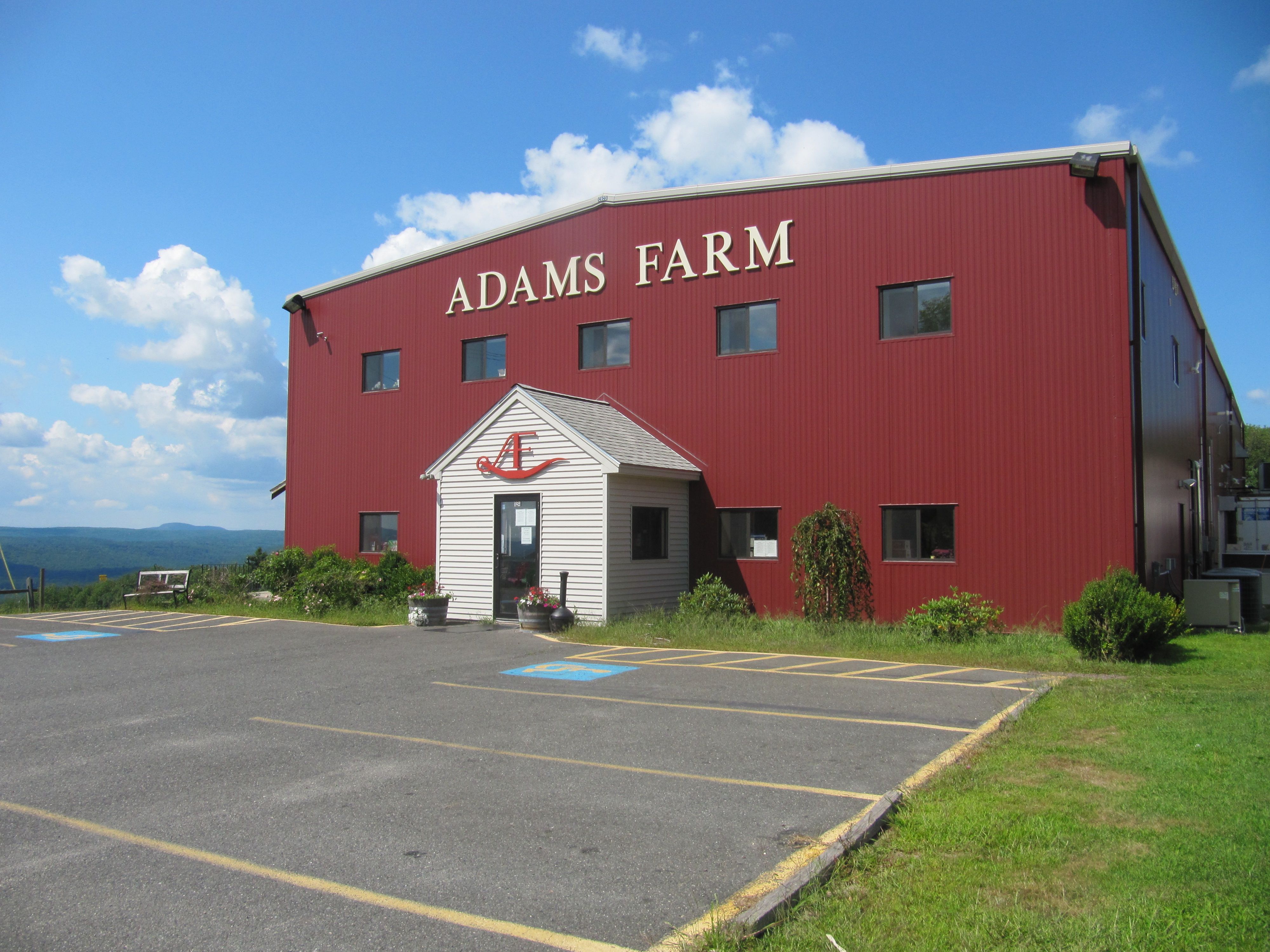
There were five local slaughterhouses in Athol when Beverly and Lewis Adams began to sell packaged meat as part of a transition away from the increasingly unprofitable business of dairying. Lewis slaughtered the cows and pigs they raised on their Bearsden Road farm, an Italian butcher from Donelan’s market in Orange did the cutting, and Beverly packaged the meat for her husband to sell around town. The business grew, and after Lewis died suddenly in 1973, Beverly kept it going as a way to support her five children.
She was also continuing a trust from her mother-in-law, Hester (Comerford) Adams. Hester was born in Athol in 1885 and grew up on a farm a little farther along Bearsden Road from the spectacular spot at the crest of the hill occupied by the present-day Adams Farm. Hester’s father, Richard Comerford, was the son of Irish immigrants who became a veterinarian in an era when horses provided much of the point-to-point transportation in both urban and rural places. Injured city horses were often sent to the country for rehabilitation, and Richard seems to have been among the several animal doctors in Athol—his son became another—who attended to them.
But the Comerford women were equally involved with both doctoring and animals, a facet of this farm family that continues into the present day. Hester was the youngest of nine children; her oldest sister Ethel pursued a medical degree in the early twentieth century, interning at the Massachusetts Homeopathic Hospital and later running her own practice in Leominster and the North Shore. (Homeopathy, now an “alternative” medical practice, was much more mainstream at the time, and many women were homeopathic MDs.)

And Nora, two years older than Hester, became a farmer in her own right, working with her brother Tom to keep the Comerford dairy farm going through the challenging 1920s and 30s. Like many other area farm families, they both sold to people in the industrial towns and sometimes worked there themselves—in Tom’s case, in one of the local tool factories. Nora was the farm’s mainstay: Athol street directories and federal census records list her variously as a milk dealer, a farmer, and a “farmerette” (a term used during World War I for young women who took over farmhand jobs usually held by men who were away at war).
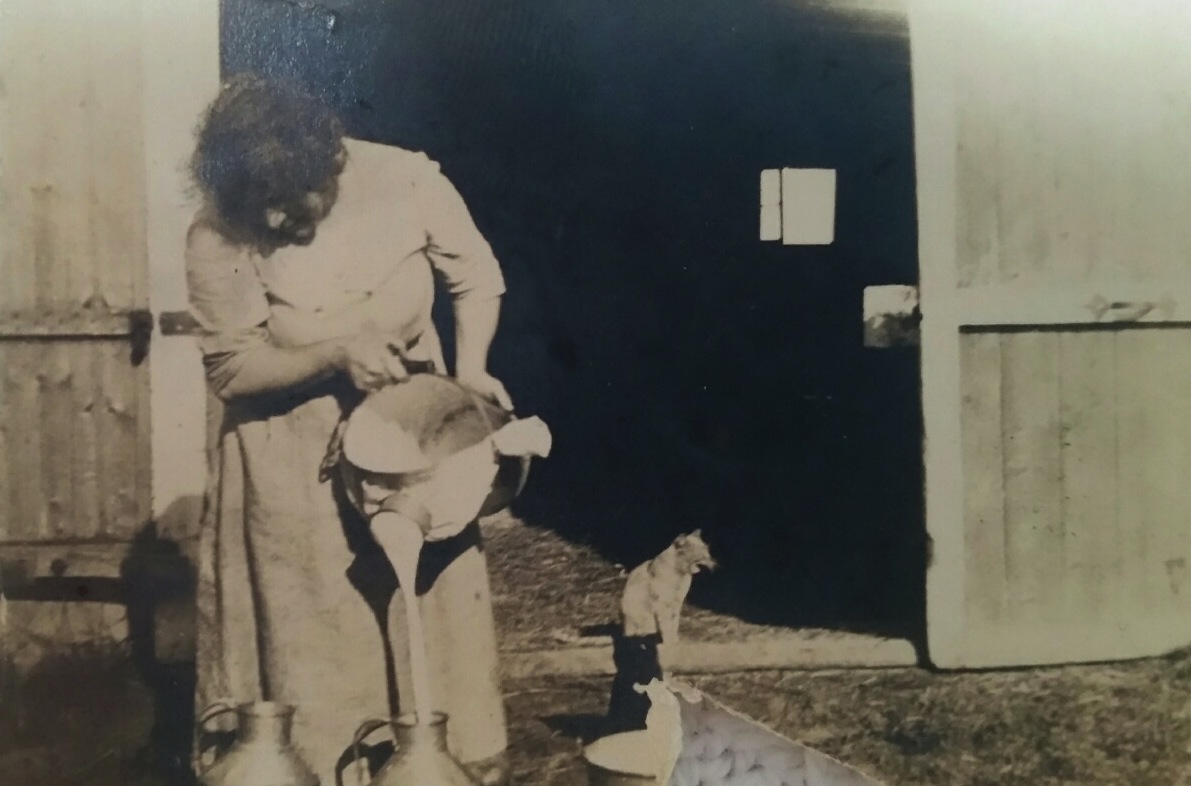
In 1915, at the age of 30, Hester married a man from a French Canadian family, Lewis (Louis) Adams. Hester, not her husband, seems to have remained the primary farmer and land-owner; four years after her marriage, she purchased some land next to her family’s farm and used it to pasture and milk her own dairy cows. The couple had three sons—Hector, Charles (Chuck), and Lewis Jr—but the marriage did not last. By the end of the Depression, and continuing into the 1950s, it was Hester and her two oldest sons who were working the farm. The sons also inherited the neighboring Comerford farm when Nora died of breast cancer in the 1940s.
It was Hester’s youngest son, Lewis, who built the first slaughterhouse at the top of Bearsden Road. That was in 1946, at a time when it was already becoming more of a challenge to keep small-scale dairying profitable. When Lewis married Beverly Heath in 1955, it was becoming clearer that they would have to adapt and change if their business was going to survive. Beverly has a very clear recollection of her new mother-in-law entreating her to keep the farm in the family. It was a charge that struck more deeply when Hester died of a sudden heart attack that year at the age of 70.
Lewis and Beverly worked together to reinvent their hilltop operation. Lewis had always raised some heifers for meat, but they expanded this sideline, added pigs, and began growing corn to feed the animals. They built a new slaughterhouse in the late 1950s and stopped dairying altogether. They found customers among both farmers needing slaughtering services and—once they added a small retail store—shoppers looking for good affordable meat. In the 1960s they sold the old Comerford farm to reduce their tax burden, concentrating on raising their family and expanding their new specialized trade.
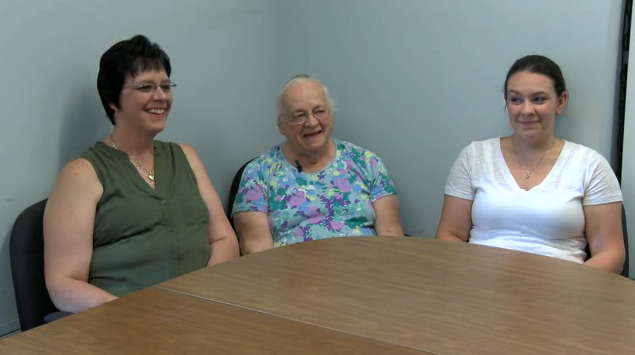
In the early 1970s, they had just updated the slaughterhouse again, building a larger facility on the eastern side of Bearsden Road, when Lewis died suddenly, leaving Beverly with five children under 17 and a challenging business to run. She kept it going, eventually taking her children into partnership with her, and Adams Farm remains in family hands, with some of Beverly’s grandchildren now involved as well. Beverly still comes to work most days, although her daughter Noreen and son Rick now run most of the day-to-day operations.
They do so in a greatly-enlarged facility, one that was completely rebuilt after a devastating fire shortly before Christmas in 2006 burned the 1970s structure to the ground. The resurgence of Adams Farm is a source of pride for many people in a town that still struggles to define itself after the loss of much of its major manufacturing in recent decades. In fact, the slaughterhouse is now the largest in New England and a vitally important node in the “local food” economy not just for Athol and the North Quabbin, but for the entire region. More than 500 small farms avail themselves of its services, and its retail store is almost a mini-supermarket in its own right, albeit one with a very heavy emphasis on meat.
Many of the farms that send their animals here go to great pains to emphasize the beauty of their own pastoral settings, the health and individuality of their livestock, and the aesthetic pleasures of the meat they sell. Adams does none of this: it is a resolutely utilitarian business, homey and practical in an unpretentious way.
It is, in fact, a somewhat paradoxical place, local and not local, agricultural and industrial, a functional complex in a stunningly beautiful location. It is crucial to today’s rapidly-expanding (and often upscale) food movement in New England, but it is itself firmly rooted in an older agricultural economy and closely tied to the blue-collar identity of the area. Few of its own retail products are local; much of the beef in the store comes from Amish farms in Pennsylvania, while most of the pork is from Canada. (Rick Adams makes long trips each week in the Adams Farm truck to pick it up). But all of it is humanely raised, hormone and antibiotic free, and processed on-site, placing Adams Farm somewhere between old and new, organic and conventional, artisanal and industrial.

It might seem that the four-generation legacy of women being centrally involved in running this farm and slaughtering operation is somewhat paradoxical as well. But the women themselves don’t see it that way. For Beverly (now Mundell), the business is what was in front of her when she needed to provide for her family. For her daughter Noreen Heath-Paniagua and Noreen’s daughter Chelsea Frost, this is simply what they’ve known all their lives—“It’s all I know,” in Noreen’s words.
They do admit to finding inspiration in a photo of Nora and Hester Comerford standing next to each other looking as though they’ve just finished milking. The photo hangs in several places around the building, one of only a few family photos that survived the 2006 fire. “They’re like my heroes, just seeing how hard they work,” Noreen says. “That’s the motivation that some of us need to keep going sometimes.”

 ]]>
]]>