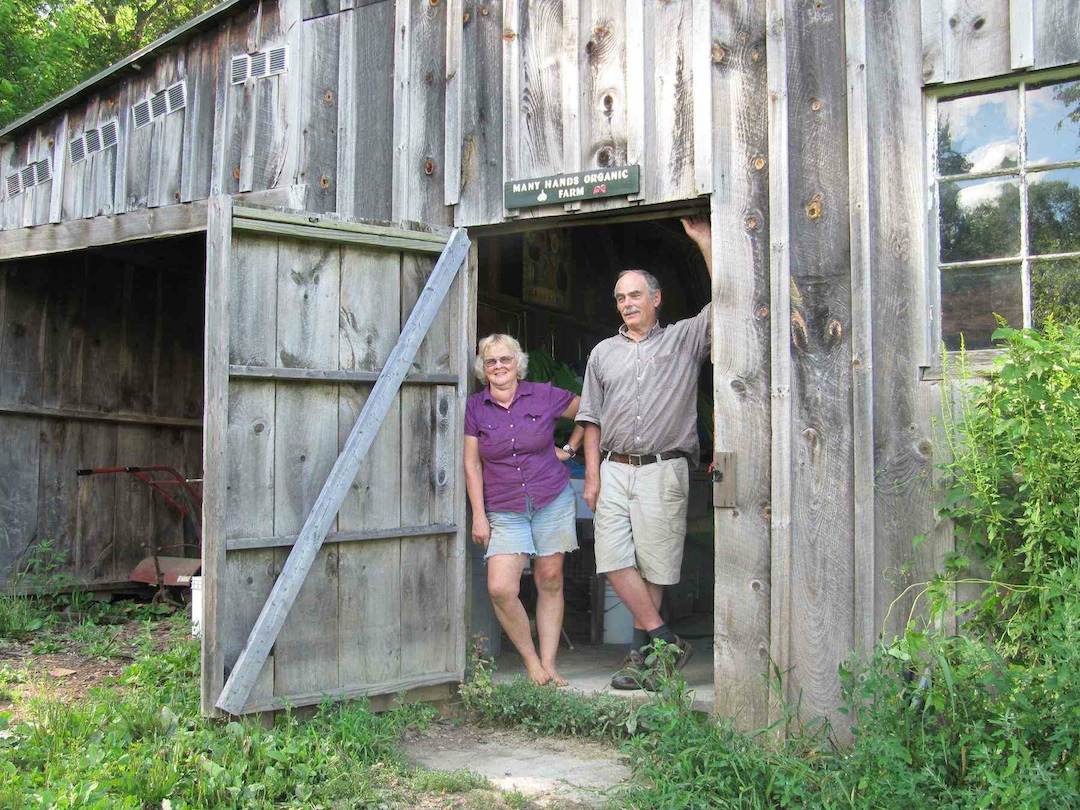
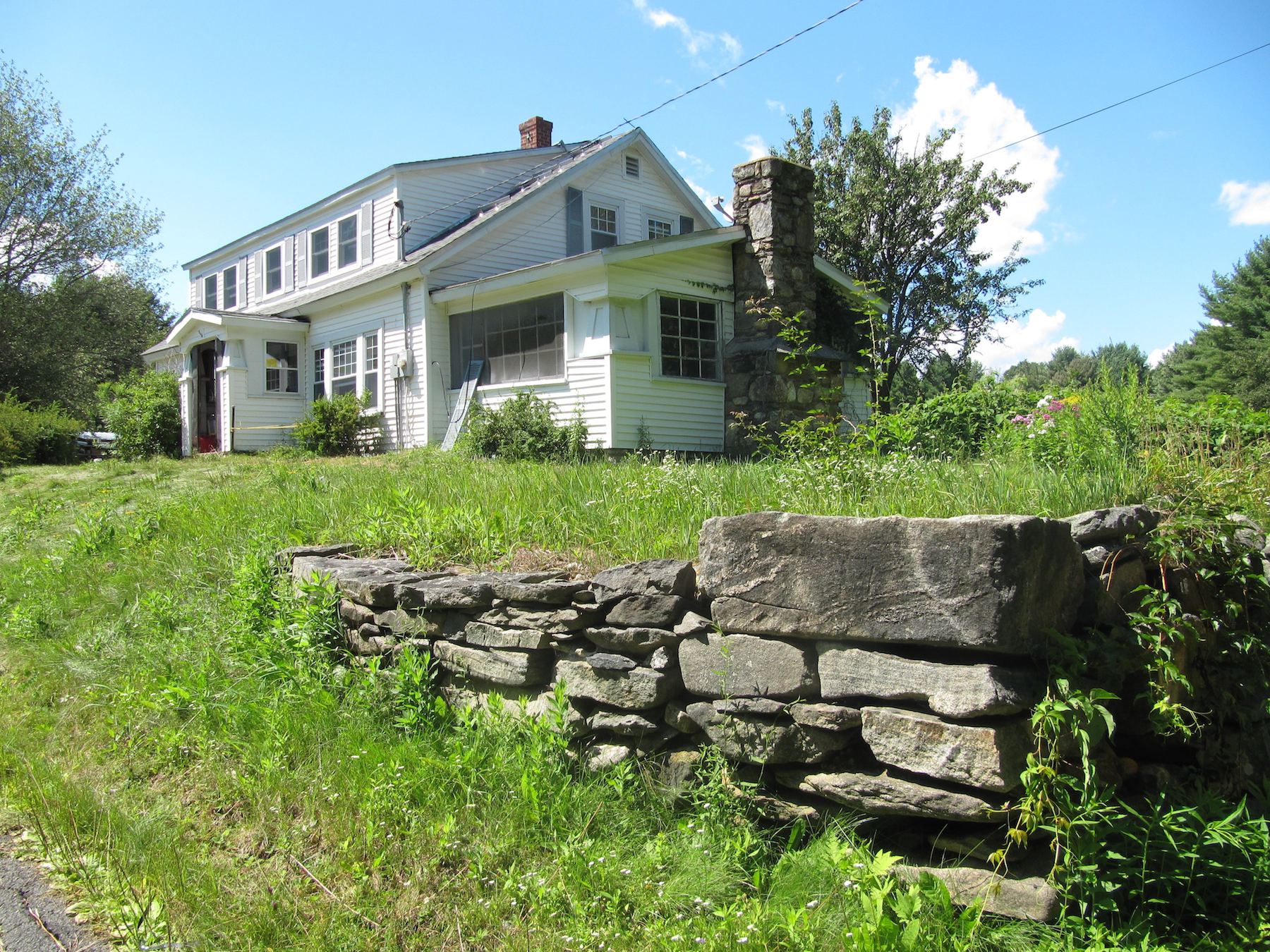
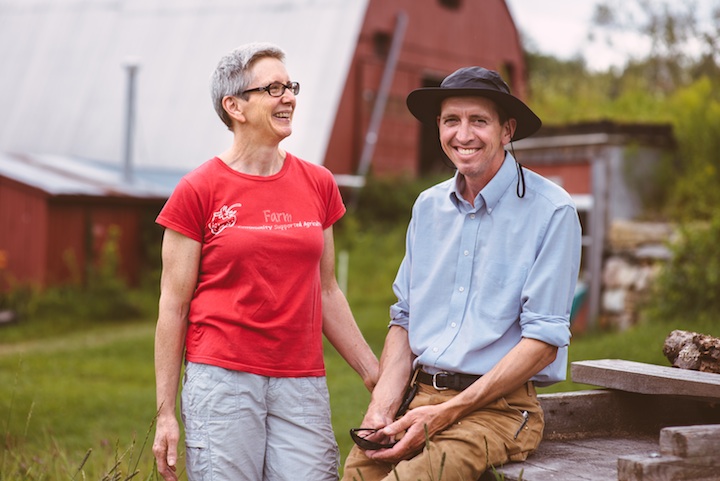
Julie Rawson grew up on a western Illinois farm with parents who mixed agriculture, medicine (her father was a large-animal veterinarian), and activism (her mother was deeply engaged in civil rights issues). When she was pregnant with her first child, she said to her husband, Jack Kittredge, “I’m really sorry, but I think I have to raise these children on a farm.” Jack’s background was far more suburban. “I wasn’t a farmer and didn’t intend to be a farmer,” he recalls, “but I fully supported homesteading, raising your own food, having the kids have access to all the principles and lessons that nature teaches you.”
They purchased 55 acres of land carved out of what had been a larger farm in the southern part of Barre, and moved there in 1982. The surrounding acreage was already being subdivided into smaller houselots, but Julie and Jack immediately began creating a new farm, building an energy-efficient house and “a lot of sheds” as well as planting fruit trees and adding three more children to their family. They started marketing food on a small level in 1984 and now sell vegetables, fruit, meat, and eggs, mostly through Community Supported Agriculture (CSA) shares. They are also deeply involved in the policy, advocacy, and education sides of farming through their work with the Northeast Organic Farming Association (Julie serves as the executive director of NOFA/Mass, which is headquartered at their farm, and Jack is the policy director).
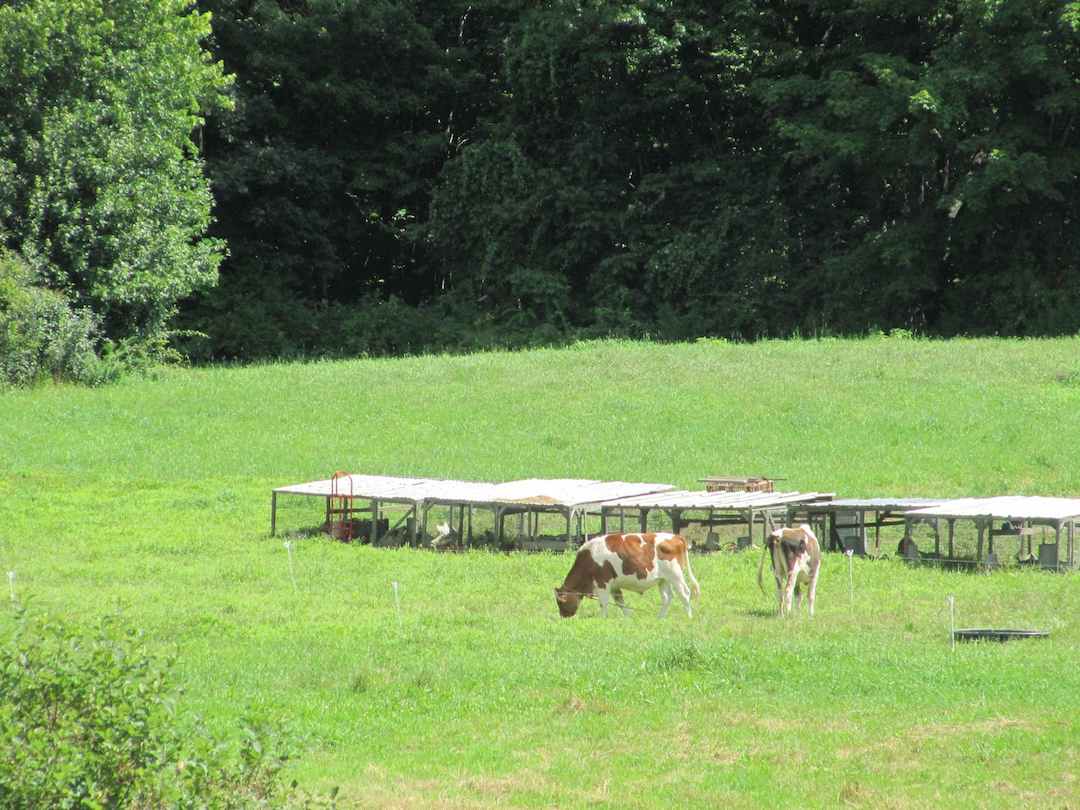
We tend to think of the 1960s and 70s as the “back to the land” era, making Many Hands Organic Farm something of a latecomer to that movement. And yet the history going “back to the land” in the northeastern U.S. shows that Americans have been acting on that impulse for a very long time. In starting their new Barre farm in the 1980s, Julie and Jack combined many of the motivations that have prompted others—urban, suburban, and formerly rural—to start or return to farming.
The first wave of new homesteading actually happened more than a century ago, largely in response to repeated financial panics around the turn of the twentieth century. American ideals of independence and achievement sat uneasily with the realities of the expanding industrial economy, with its market-driven booms and busts. Buying a piece of land where you could grow food—what Dona Brown has termed “the enduring dream of self-sufficiency in modern America”—was one way that people sought some kind of stability and security. [1]
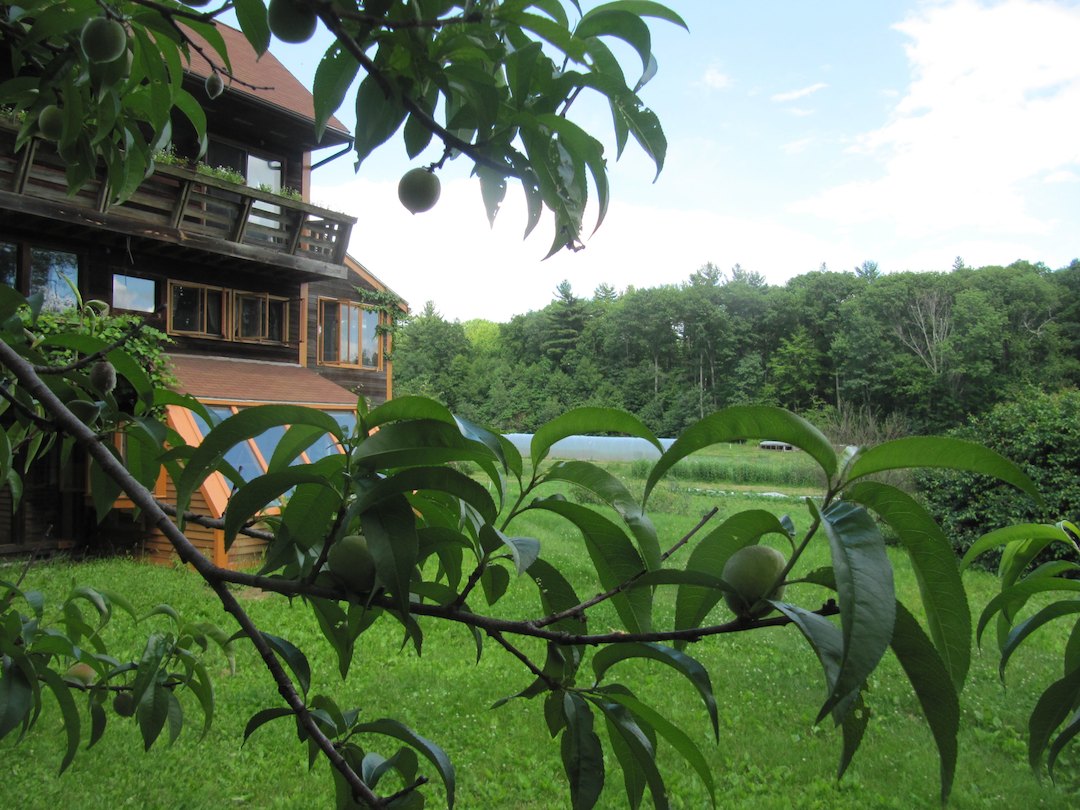
Peaking just before World War I, this trend was revived during the Depression by a wide range of people—immigrants from rural parts of southern and eastern Europe in search of affordable land, progressive reformers hoping to address the ills of industrial capitalism, city-dwellers returning to family farms as a source of food and community in hard times. Many old farms in central and north-central Massachusetts were reinvigorated in these decades, and some remain in active production today.
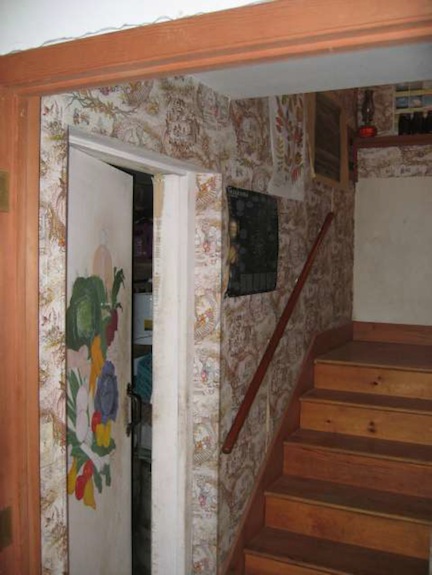
The ideal of eating healthy, home-grown food has long been a component of back-to-the-land thinking, and it is one that Julie Rawson and Jack Kittredge have embraced with particular gusto. Like other farmers who approach food cultivation in a holistic way, they see the vitality of the soil as integral to the nutritional value of what is grown there, which carries over to the health of the animals and people who eat those foods. They have worked for many years to build up the soil on their farm with minerals and organic matter and to learn about ways of preserving food at its peak—canning, drying, freezing, fermenting, juicing, and root-cellaring.
There have also always been tensions and contradictions within the back-to-the-land impulse, many of them centering around the use or rejection of the ideas and techniques of industrialized farming. Especially in the early decades of the twentieth century, some homesteaders eagerly followed the latest developments of agricultural science as promoted by agricultural extension services and companies selling new products to make farming more efficient and profitable. One of these was Red Apple Farm in nearby Phillipston, where a young couple who had grown up in Worcester parlayed their college educations in pomology (the science of cultivating fruit trees) and nutrition into a commercial orchard business at a once-disused farm starting in the late 1920s.
By the time of the more iconic back to the land movement of the 1960s and 70s, this faith in scientific agriculture was being deeply challenged. A host of interconnected environmentalist, economic, and social justice reasons came into play for the homesteaders of this era.[2] Many of these were prompted by revelations of problems caused by pesticide use. But there were also concerns about how the logic of expansion and economies of scale had left small farmers in the dust by that point. To survive economically, many older farms in the northeast turned to the kinds of direct-marketing techniques now widely favored by small producers. Red Apple Farm shifted into being a pick-your-own and farmstead operation in the early 1980s, just as Julie Rawson and Jack Kittredge were charting their own path into organic agriculture in Barre.
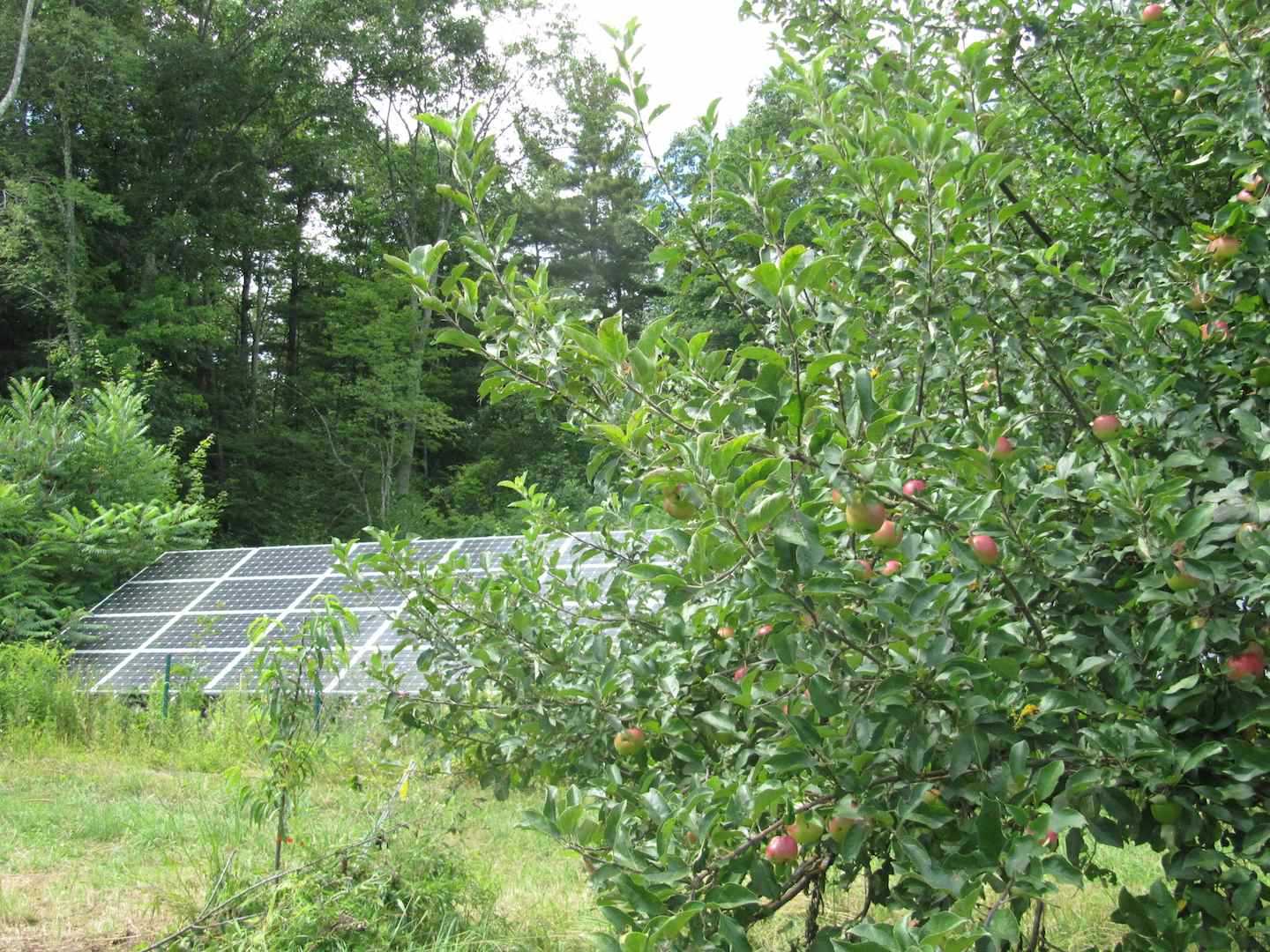
Even moreso than at most small farms founded in the environmentally-conscious era of late twentieth century homesteading, the work of Many Hands Organic Farm has been very directly linked with politicized issues around energy use, social justice, and climate change. Their project of employing and mentoring ex-offenders and people in recovery from addictions is prompted by their sense of how the worst stresses of contemporary modes of living, working, and eating fall disproportionately on the bodies of particular kinds of people, and how those patterns map onto racial and economic disparities. They are at the leading edge of discussions about “regenerative” modes of food production that minimize disruption to the teeming microbial life below the surface of our soils, a layer of activity that not only supports healthy food production but may provide a crucial way to sequester much of the excess carbon now circulating in—and over-heating—the atmosphere.
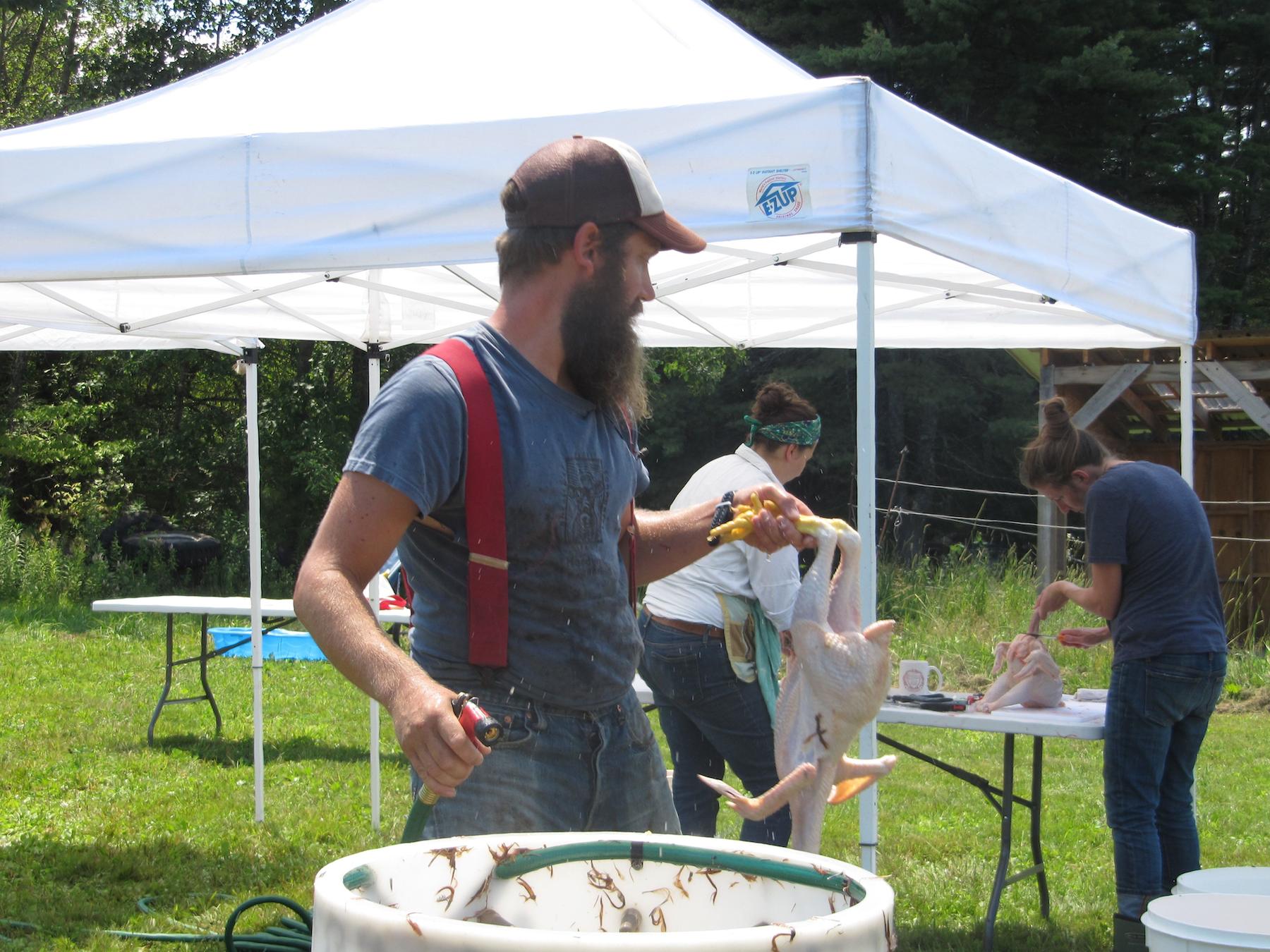
They are also helping to ground the dreams of a new generation of homesteaders in the challenges of actually running a farm. “There are a lot of folks out there saying, ‘Oh, I just want to give up my job and be a farmer,’” Julie says. “So I say, ‘Well, why don’t you come out and work with me for a day and see how it feels?’ And some of them go away and say, ‘Okay, I get it now, I don’t really want to be a farmer but it’s nice to know where my food comes from.’ And others get totally taken with it and want to change their lives.”
NOTE: Jack and Julie are now retired from NOFA. This post reflects information from the 2015 Farm Values project.
[1] Brown’s Back to the Land: The Enduring Dream of Self-Sufficiency in Modern America (University of Wisconsin Press, 2011) is a fascinating exploration of the recurring cycles of the homesteading impulse.
[2] Warren Belasco’s excellent study Appetite for Change: How the Counterculture Took on the Food Industry (Cornell University Press, 1989) explores the shift into a more environmentally-conscious mode of homesteading.



 ]]>
]]>
On a cold Sunday morning in February 1787, several thousand soldiers at the end of a brutal march through a blizzard surprised a sleeping army encamped in the center of Petersham and routed them quickly, all but ending an armed uprising by farmers in the central and western parts of the state. Just to the south was the farm of Benjamin Chandler, who had come to Petersham from Westford. We don’t know exactly when Chandler moved to town or where he stood on the politics of the “Regulation,” as Shays’s Rebellion was known to many. But we do know something of the subsequent history of his farm, including its recent purchase by young farmers who were able to leverage support from emerging models of land stewardship designed to keep farmland in production.
The two events are distant in time, but there’s a thread connecting the 18th century fight with the 21st century sale. At bottom, both were responses to a fundamental problem in American farming: having a farm doesn’t necessarily equate to having enough capital for a farmer to stay afloat in a market-oriented economy.
First, some of the big picture. Historically, food and land in Massachusetts have become commodified—that is, their financial value became determined entirely by market-oriented considerations—along very different paths. In this part of the U.S., land has been in limited supply for a very long time. As far back as the colonial period, there wasn’t enough arable land in Massachusetts for everyone who wanted to farm it, and by the time of the Revolution, many farmers—like Chandler—were moving into less-fertile areas like the central and western Massachusetts hill towns.
The value of land has of course risen and fallen with economic ups and downs, and there have been times—for example, during the Great Depression of the 1930s—when it was possible for new farmers to find affordable land in central Mass. But by then, the region’s agricultural economy had been struggling for many decades with the fact that food was being produced on much larger farms elsewhere, creating economies of scale that made it steadily more difficult for small New England farms to compete. As a commodity, industrially-produced food has gotten steadily cheaper, to the point that Americans spend proportionately less than anyone else in the world on what they eat (under 10% of disposable income, on average).
Area farmers have historically found many ways to adapt and cope. They’ve shifted to dairy and fruit production, formed cooperative organizations, courted tourists and sold some of their land for residential development. But as the 20th century went on, and especially after the rise of interstate highways, long-distance refrigerated trucking, and supermarket chains after World War II, small farmers in this part of the world found themselves stuck in a financial squeeze that is far from resolved today. Without the benefit of those economies of scale, individual small farmers can’t hope to compete on price. A small farmer paying a hefty mortgage has even less chance of breaking even, let alone making any kind of profit.
It is, in fact, the very same dilemma that Daniel Shays and his “Regulators” were attempting to regulate: the balance between the demands of a capital-oriented economy and the realities of making a living from the land. So to bring things back down to the local scale: Does the recent purchase of the old Chandler Farm in Petersham by Emily Anderson and Tyson Neukirch suggest a new approach to this long-standing predicament?
Emily, a Petersham native, and Tyson, a Nebraskan who learned organic farming in Oregon and California and now teaches at The Farm School in Athol, are part of a rising generation of young farmers who see themselves contributing to a deep rethinking of how and why we farm. Living on a two-acre property, they wanted to broaden their agricultural presence in the town while remaining close to its center. That’s a tall order in Petersham, where large parcels seldom come up for sale and are far from affordable when they do.
But the former Chandler Farm, which passed through ownership by Chandler descendants and others in the LePoer and King families by the mid-20th century, presented a unique opportunity—if they could put together the capital to buy the land at a price that wouldn’t prevent them from ever making a living from it. The land was owned by Gil and Linda King, who kept its central open area—the only prime agricultural land in the 106-acre parcel—as a hayfield but had not cultivated it otherwise. The Kings had already put the farm on the open market, but readily took it off again when Emily and Tyson approached them with a proposal for a somewhat different kind of sale.
That proposal was based on another kind of big picture: one that considers the resources of a town or a region much more holistically and asks how they can fit together to support human sustenance and livelihood, species and habitat biodiversity, carbon sequestration, water and air quality, and a “sense of place” shared and appreciated by residents and visitors alike. As at Chase Hill Farm in Warwick, public and private entities joined forces to facilitate the sale and protect the land.
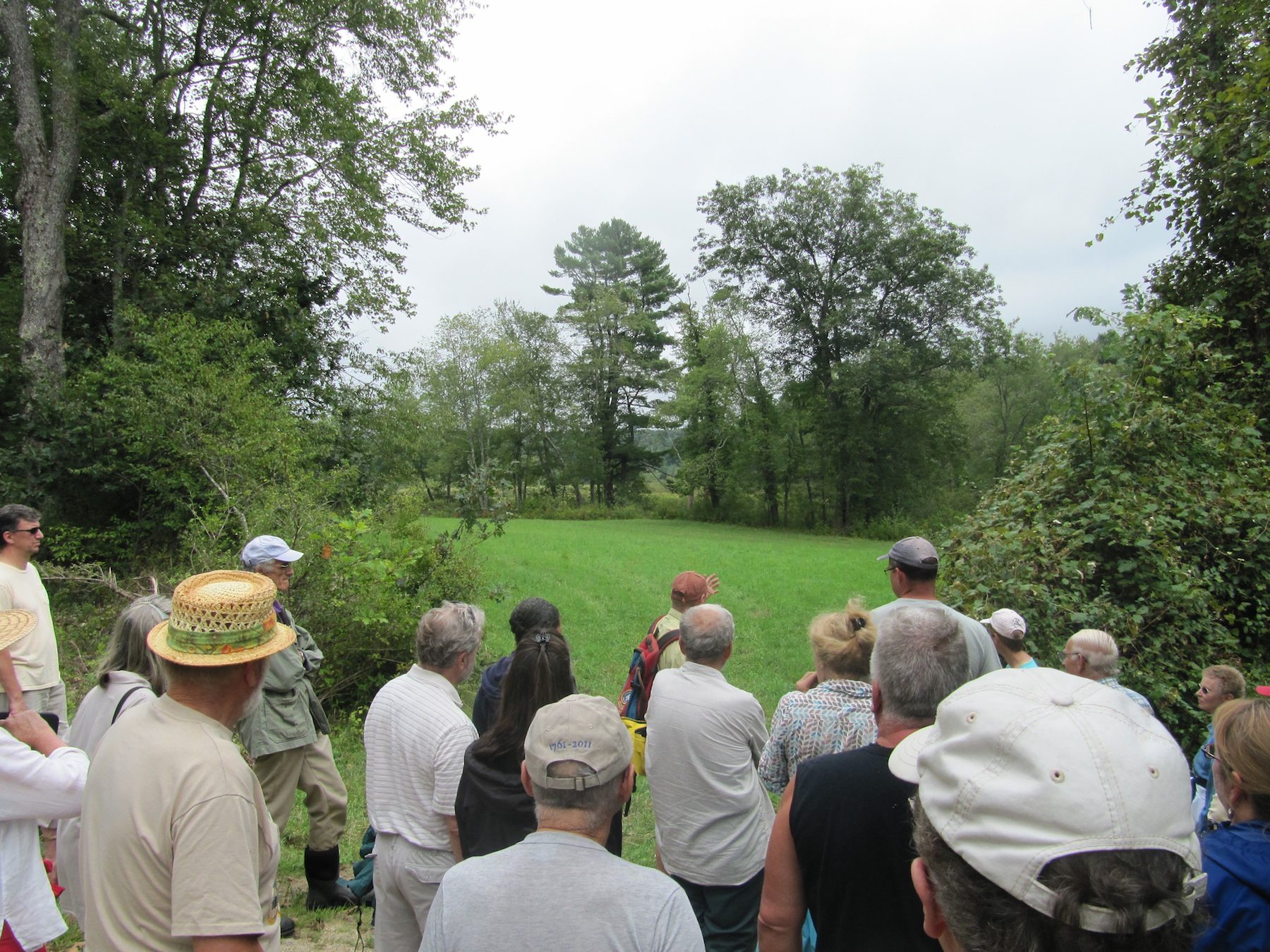
Seeing a chance to provide access to town-owned conservation land, among other benefits, Petersham’s Conservation Commission quickly updated its Open Space and Recreation plan as a step toward applying for grants through the state’s Executive Office of Energy and Environmental Affairs and the Quabbin to Cardigan Partnership, a regional landscape conservation effort of which Petersham is a southern terminus. The East Quabbin Land Trust assisted with grant applications and private fundraising, demonstrating the role that land trusts are increasingly playing in filling the gaps in what individuals and public agencies can do. (An article about EQLT’s role can be found on page 3 of this newsletter.) And the Kings themselves, along with local realtor Chuck Berube, were key partners, willing to forego the relative simplicity of a traditional sale in order to work with buyers who had a compatible vision of the farm’s place within its social and environmental ecosystems.
One big difference from the Chase Hill Farm conservation process was that this was not a matter of expanding an existing farm operation but establishing a new one with a young farm family (Emily and Tyson have three children). The average age of American farmers continues to rise while their numbers continue to dwindle, and despite the much-heralded turn toward local and small-scale agriculture over the past decade, the most recent Agricultural Census, completed in 2012, shows a considerable drop in the number of new farmers in the previous five years. While opinions differ on whether this indicates a crisis in the making, it does raise important questions, and advocacy groups like the National Young Farmers Coalition have identified access to land as one of the main obstacles that entry-level farmers face.
Unlike those who tend to demonize the industrial food system, Tyson’s upbringing on a conventional corn and soybean farm has given him an understanding of how large-scale farmers, too, are caught in a system where the costs of operation and the prices of products are too often out of sync. Noting that tax codes and subsidy systems practically dictate that farmers stay on the treadmill of expansion and high-input methods, he says, “Those are not ideas conceptualized by an agrarian society. Those are the ways an agricultural system interacts with the larger economic one.” It’s essential, he argues, “to separate the speculative value of land relative to its agricultural value.”
The vision for the future of this farm goes further, upending the usual focus to put the capacities and limitations of the land itself at the center. “This is all an experiment,” says Tyson. “The exciting thing is that I think as we shift our understanding of what agriculture is and what a farm really is, we also begin to understand that the products that a farm is able to produce are going to change and evolve over time, hopefully not based just solely on what the consumer demands are, because that’s how we’re driven right now, but what the ecological system needs of the farm itself are.”
It’s a vision that nods toward the small scale on which the “Regulators” of 1787 necessarily practiced agriculture. But Tyson is far from romantic about those older modes of farming, which he describes as “by no means restorative or resilient.” Noting the inherent limitations of the King Farm, with its “little island” of prime soil in the midst of a rocky and forested terrain, he asks, “How can we work with these types of landscapes to make them both ecologically resilient and also economically productive? I think it’s going to take some different perceptions of what agriculture is to be able to make that a reality.”

 ]]>
]]>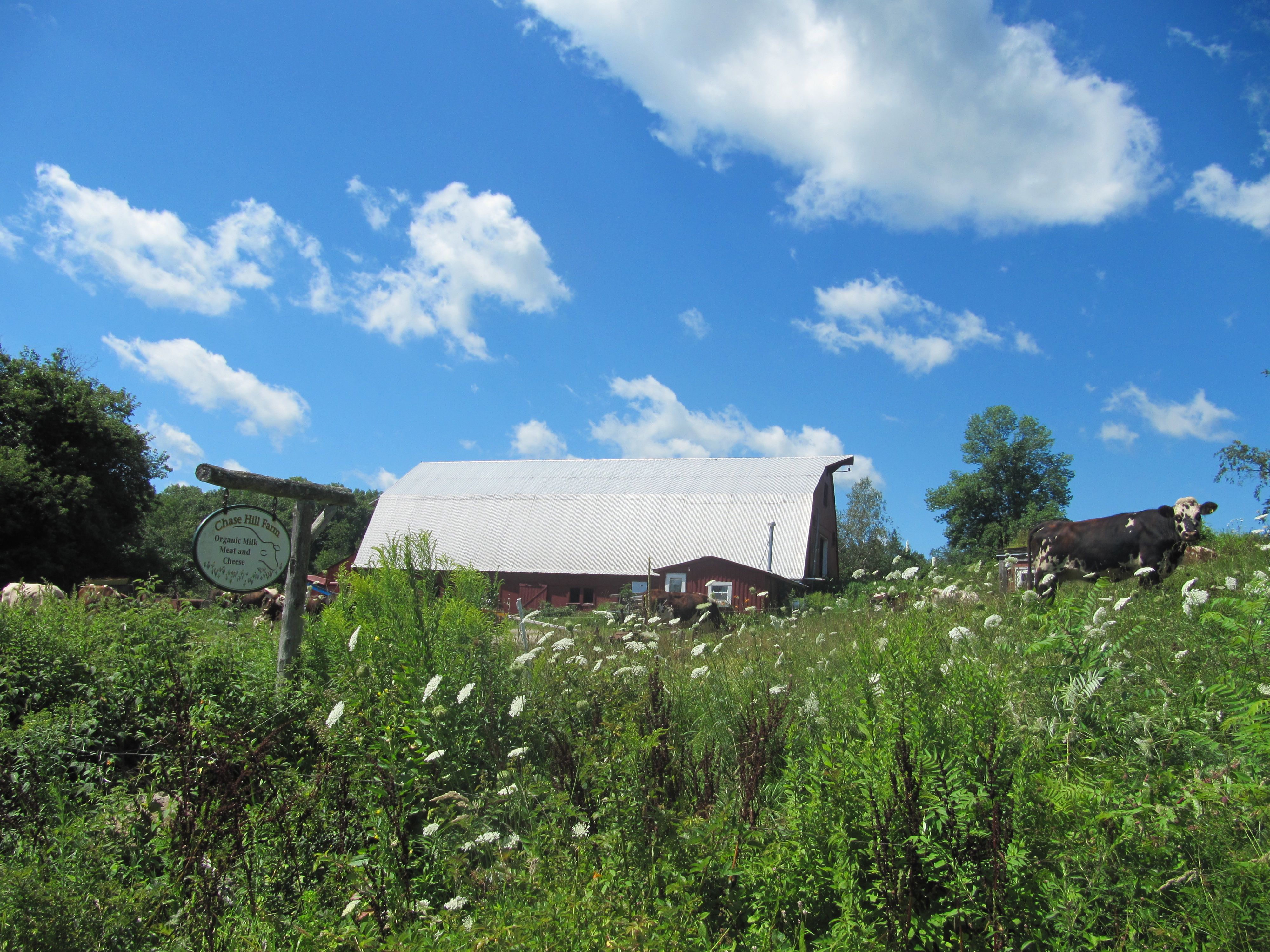
Chase Hill Farm in Warwick feels like one of the most peaceful places on earth. It’s on one of those roads where you look twice when a car happens to drive by. There’s a view of Mount Monadnock across the fields to the northeast. Brown and white cows are usually to be seen grazing on one of the hillsides. A mysterious little doorway—the entrance to the cheese cave, it turns out—leads into the side of a hill. The only disruption is from the sheepdog who comes to meet you, but when Mark Fellows appears in response to her barking, he simply advises, “The best way to get her to stop is just to ignore her.”
The calm is partly a reflection of the farm’s location. But it’s also something that has been achieved gradually over the three decades since Mark and his wife Jeannette took over his parents’ business. Slowly and thoughtfully, they’ve been disentangling what was once a conventional commercial dairy from the surprisingly complex processes that have made cow’s milk one of the most fully industrialized of food products. At the same time, they’re part of a new partnership between farmers and land conservationists, a relationship that was by no means always amicable.
The Fellows—mother Vida, father Archie, and a growing number of children—came to Warwick sometime around 1920. Some family members had been working in the factories in Orange, but they took up farming in their new home, first at “Mayo’s Corners” where Athol and Richmond Roads cross, and then on Chase Hill Road just north of the current farm.

It was not the best of times to be a farmer in a hill town like Warwick. Thanks to more intensive farming methods, New England’s overall agricultural output actually expanded all the way through the 19th century, not peaking until 1910.[1] But approaches that worked on prime lowland farms were not suited to thinner upland soils. In an effort to keep up with the pressures of expanding commercial markets, many hill town farmers drastically cleared and overused land that was formerly wooded or kept as permanent pasture. The lumber industry that made up a sizeable portion of the area’s economy also contributed to erosion and depletion of hilly fields, sparking a movement for land conservation and calls to let the uplands return to forest. The largely-denuded Mount Grace was purchased in 1915 as part of the new state forest system,[2] and after the start of the long agricultural depression that followed World War I—prelude to the Great Depression of the 1930s—more and more old Massachusetts farms became public lands and new-growth forests.
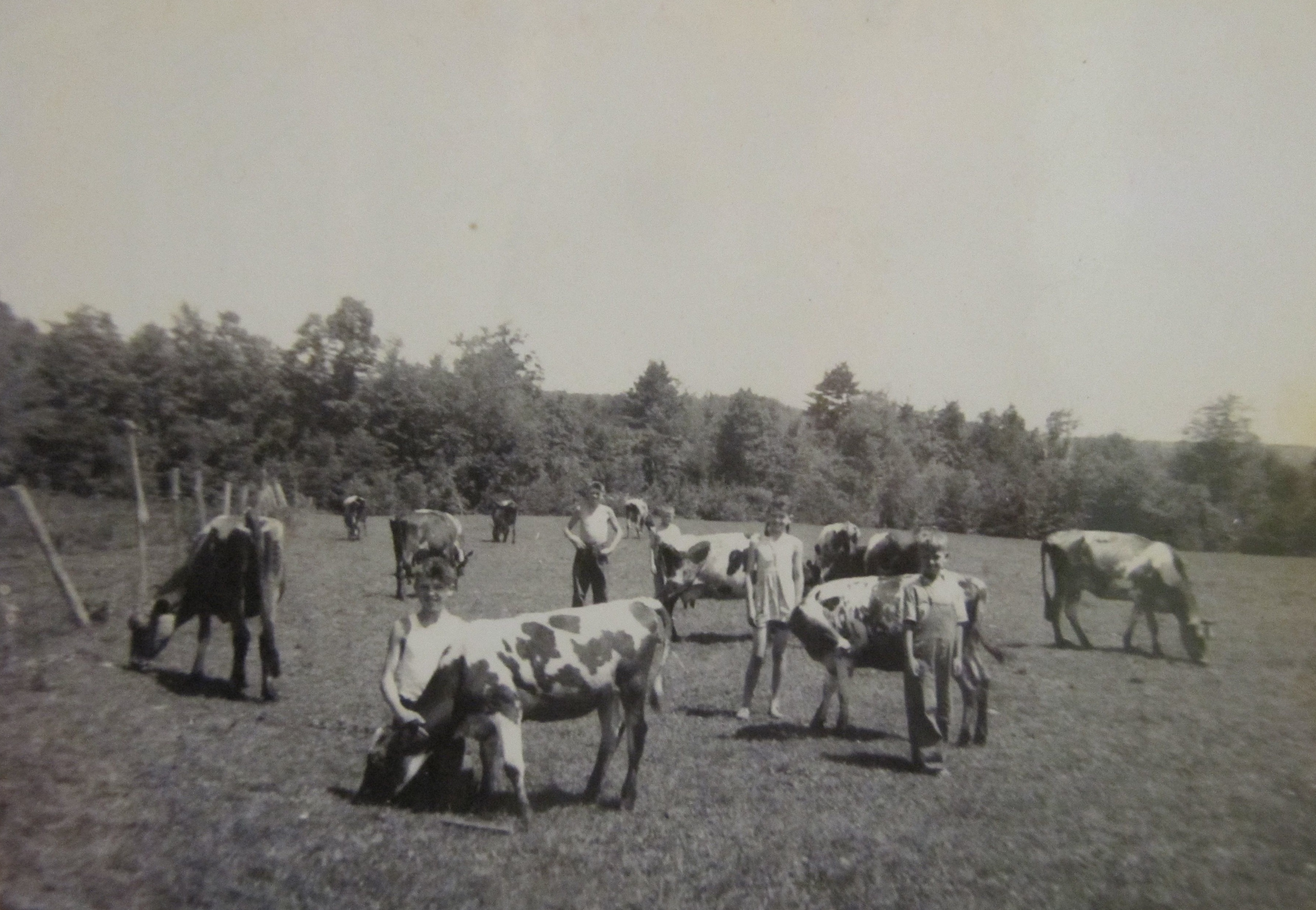
But not everyone was ready to give up on farming in Warwick. The town elected its first Director of Agriculture in 1919,[3] and the arrival of the Fellows family around that time suggests that some people were seeing the old fields as opportunities rather than problems. Archie and Vida’s large family—eventually there were 14 children—provided an in-house labor force, and there was a living to be made in the active network of small local dairies that supplied area towns with milk.
Archie and Vida’s marriage eventually failed, but Vida and the children stayed on the farm. Not only that, but her second-oldest son, Winfred, harbored dreams of starting a new farm. Like many farm children, he raised animals of his own from an early age. And like many of his siblings, he completed some of his high school training at New Salem Academy, 15 miles away, where an agricultural studies program inspired many local youth to pursue farming. After graduating, he acquired a small herd of Guernsey cows and made plans to build a new farmstead on the hillside next to his parents’ home.
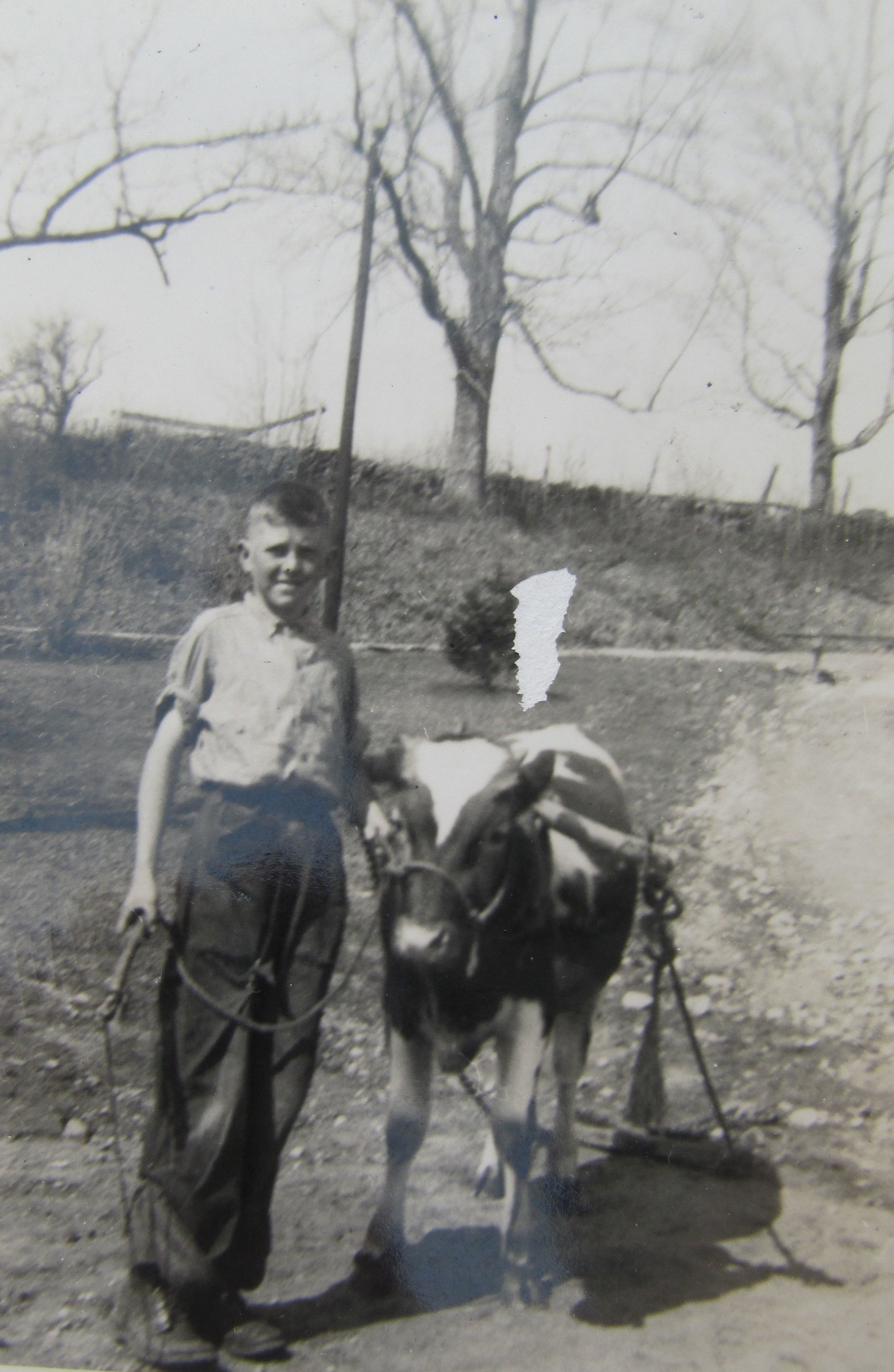
World War II intervened. 20-year-old Winnie Fellows was drafted in 1942 and lost his life in Germany two years later. He had entrusted his herd to his next-oldest brother, Oliver, and it was Oliver, with his wife Virginia, who eventually purchased the acreage from Vida and built the house and barn that stand on the property today. They farmed it from the mid-1950s to the early 1980s, raising their five children and selling their milk to regional bulk distributors.
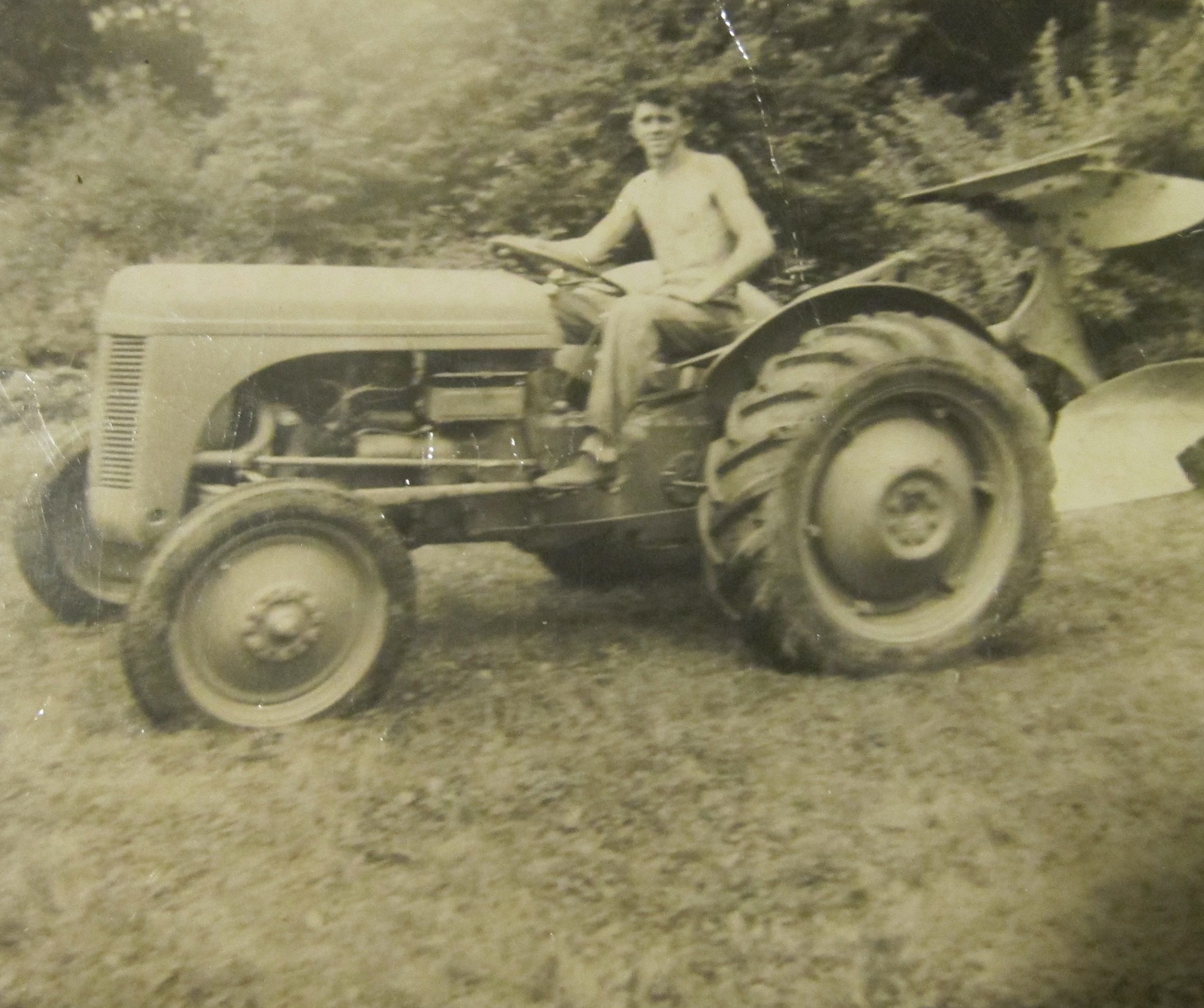
It was an exceptional thing for a young couple to start a new farm in a north-central Massachusetts hill town in the middle of the 20th century. It went against all the trends of old fields continuing to revert to forest or being sold for housing developments, young people moving into towns and cities for work, and food being distributed over longer distances on expanded postwar highways that let refrigerated trucks travel between source and supermarket with petroleum-powered ease. Town historian Charles Morse reported that the Director of Agriculture “had lost his enthusiasm from lack of interest and the town refused to elect one in 1941.”[4] Yet Winfred Fellows’ hopes for a farm in the 1930s and 40s, and Oliver and Virginia’s realization of those hopes in the 50s, show us that we need to look carefully at the many ways farmers have found to maneuver within the trends and sometimes to push back against them.
By the early 1980s, when Mark and Jeannette Fellows bought Chase Hill Farm from his parents, dairying in the area was shrinking fast. Consolidation in the milk distribution industry, among other factors, made it difficult or impossible to stay solvent below a certain scale. Mark had been trained at Cornell University to follow a conventional path into farming, but quite quickly he and Jeannette found that they didn’t want to be driven by conventional marketplace logic. Experimentally, one step at a time, they began to set the farm on a different footing.
In hindsight, the basis of their strategy is very simple: keep costs of production low and produce as much as possible of what they need themselves. In practice, this has meant embracing an idea that has steadily gained currency among farmers practicing “regenerative” and pasture-based agriculture: that healthy grass is the foundation for just about everything else that happens on the farm. The 40 cows at Chase Hill eat fresh grass seven months of the year and dried grass—hay—in the winter months, grown on Chase Hill’s own fields plus some owned by neighbors.
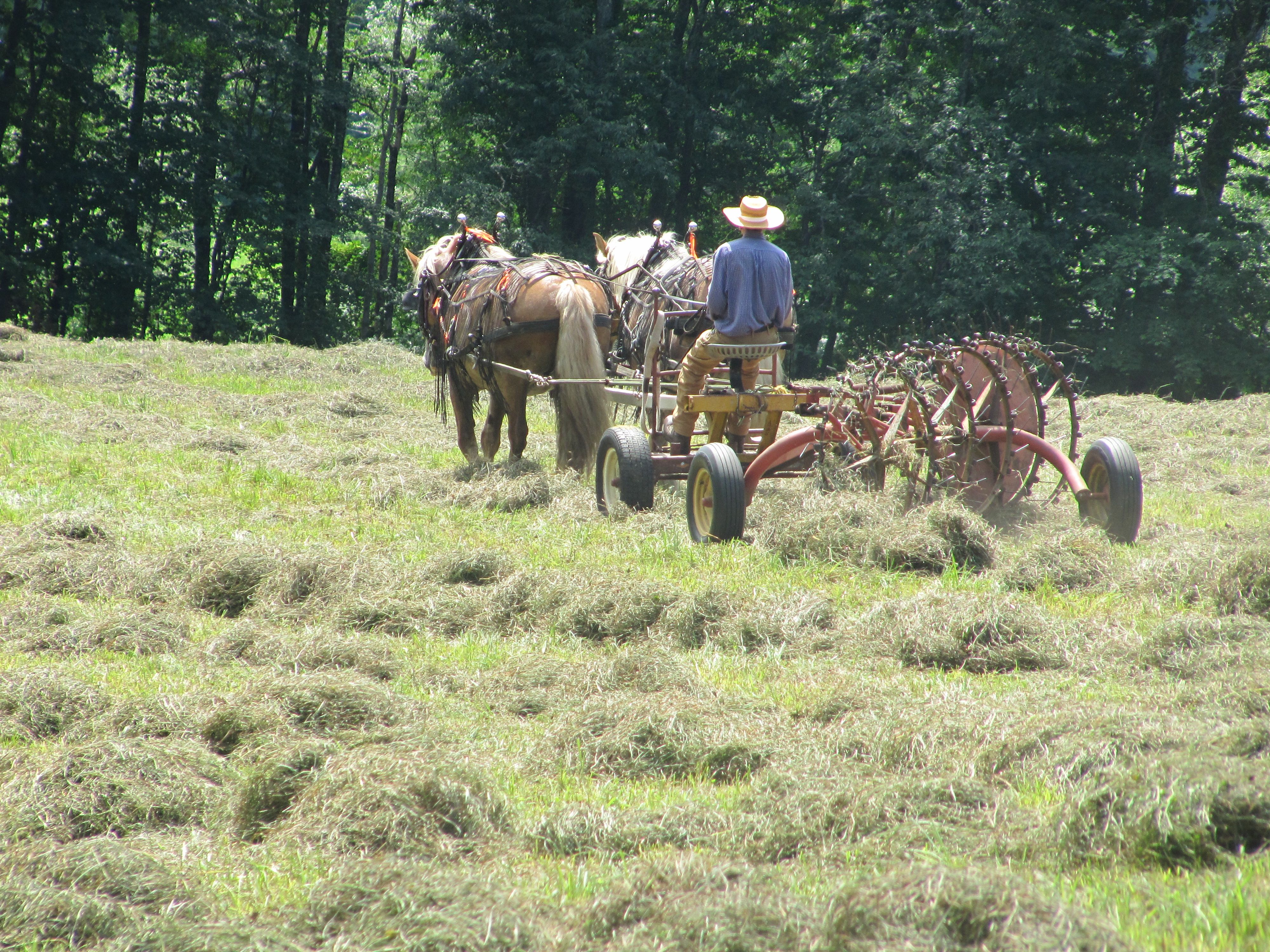
“That whole thing is basically a solar panel,” Mark says, pointing to a hillside whose soils were deemed “marginal” by earlier generations of farm agencies and advocates. More literal solar panels on the barn supply more than half the farm’s electrical needs, and three draft horses provide a good deal of the energy for spreading manure and making hay, further minimizing the need for petroleum products.
Hay alone is not nutritious enough to support a cow who is producing milk. The usual solution is to grow or purchase corn so that cows can be milked year-round, but Chase Hill Farm went the other way. Mark began breeding and milking the cows only seasonally and letting them go “dry” in the winter, historically the pattern in this region before new technologies like silos for grain storage enabled year-round dairying starting in the early 20th century. Industrial agriculture demands standardization and a steady, predictable product; seasonal dairying is more of a dialogue between farmers’ plans and the limits of what can be produced without undue stress by human and animal bodies, and by the land that supports them.
Two final pieces of the puzzle have helped turn Chase Hill Farm even farther toward self-sufficiency. First, Mark and Jeannette stopped making the wholesale milk sales that provided the bulk of their income in the early days. Instead, they moved toward direct-marketing, another trend that is both new and very old. And second, Jeannette started to make cheese in 2001, adding value, variety, and year-round flexibility to the farm’s other offerings of meat and raw (unpasteurized) milk. A range of artisanal cheeses comes out through the mysterious little door in the hillside, to be sold at farmers markets, some area supermarkets, and in the farm’s small on-site store.
Another change in 2001 reflects a recent trend in land conservation: protecting farmland in perpetuity so that it remains in production. When the 75-acre Mayo’s Corner farm where Mark’s father had been born came up for sale, the Fellows were concerned that one of the few remaining farms in town was ripe for development into house lots. They also saw an opportunity to gain more control over the vital pasture and hayfield base that their farm depends on. They sold the development rights on their own 260-acre farm to the state, and with the proceeds of that sale plus the help of Mount Grace Land Conservation Trust, they were able to buy the old farm at the crossroads.
Warwick’s historian, Charles Morse, was caustic about the role of the state in transforming so much of the town’s farmland into forests. The state, he declared in his 1963 history, had “gradually devoured nearly one-third of the town bite by bite” while the majority of the population “bowed to the inevitable.”[5] But protecting farmland charts a middle course between taking land out of active use and letting purely financial considerations decide its future. It’s an approach that resonates with Mark and Jeannette Fellows’ quiet but determined resistance to the logic of the industrialized food system, and their ongoing work of building a thriving business at its very edges.
NOTES
[1] Michael M. Bell, “Did New England Go Downhill?” in Geographical Review, Vol. 79, No. 4 (October 1989), p. 464.
[2] Charles Morse, Warwick, Massachusetts: Biography of a Town (Cambridge: Dresser, Chapman, and Grimes, 1963), p. 179. On the development of state forests in general, see “Massachusetts State Forestry Programs,” William H. Rivers, in Stepping Back to Look Forward: A History of the Massachusetts Forest, Charles H.W. Foster, ed. (Petersham, MA: Harvard Forest, 1998, pp. 147-219).
[3] Morse, Warwick, Massachusetts, p. 179.
[4] Morse, Warwick, Massachusetts, p. 180.
[5] Morse, Warwick, Massachusetts, p. 180.

 ]]>
]]>